Enhancement of Protein and Fiber Content in Wheat-Cassava Composite Noodles with Oyster Mushroom (Pleurotus Ostreatus): Nutritional and Sensory Evaluation
DOI:
https://doi.org/10.69632/jgkk.v4i01.108Keywords:
Cassava Noodles , Fiber Content, Oyster Mushroom , Protein Content, Sensory AcceptabilityAbstract
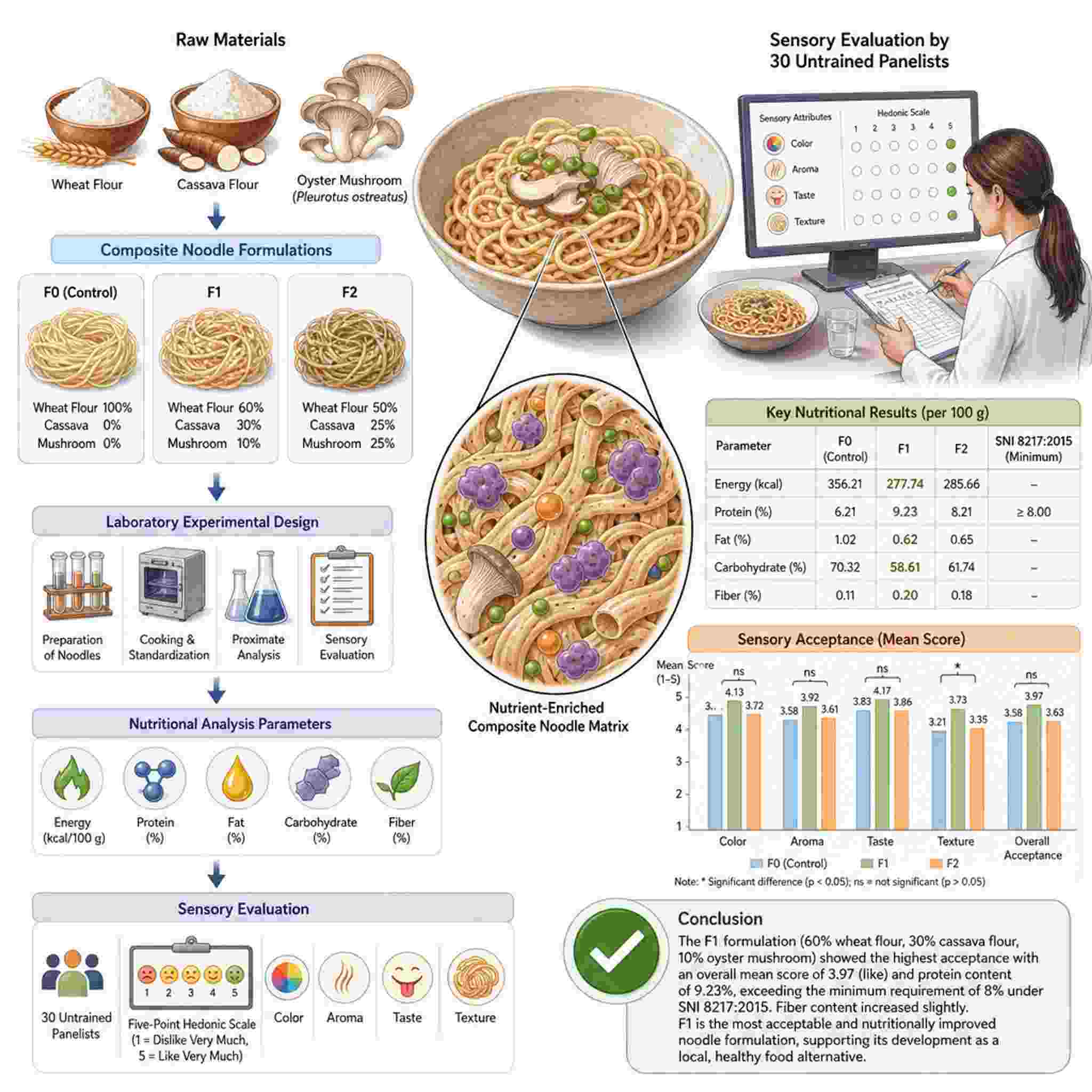
Background: Noodles are widely consumed in Indonesia but are commonly made from wheat flour, which is low in protein and fiber. Cassava flour, a local carbohydrate source, and oyster mushroom (Pleurotus ostreatus), a source of protein and fiber, have potential for developing nutritionally improved noodles. Objective: This study aimed to analyze the nutritional content and sensory acceptability of wheat-cassava composite noodles fortified with oyster mushroom as a local food alternative. Methods: A laboratory experimental design with a quantitative approach compared three noodle formulations (F0, F1, and F2) differing in the proportion of wheat flour, cassava flour, and oyster mushroom. Nutritional analysis covered energy, protein, fat, carbohydrate, and fiber content, while sensory acceptability was evaluated by 30 untrained panelists using a five-point hedonic scale for color, aroma, taste, and texture. Results: F1 contained 277.74 kcal/100 g energy, 9.23% protein, 0.62% fat, 58.61% carbohydrate, and 0.20% fiber, exceeding the minimum protein requirement of 8% for dried noodles under SNI 8217:2015. F1 also achieved the highest acceptance for most sensory attributes, particularly color and taste. No significant differences were found among formulations for color, aroma, and taste (p > 0.05), whereas texture differed significantly (p < 0.05). The overall mean acceptance score of F1 was 3.97, categorized as like. Conclusion: F1 was the most acceptable formulation, with protein content above the SNI requirement, although the fiber increase remained relatively small. These findings support further development of wheat-cassava composite noodles with oyster mushroom as a local food product with improved nutritional and sensory quality.
Downloads
Published
How to Cite
Issue
Section
License
Copyright (c) 2026 Indrawati Azzahra Arif, Fitriani Umar, Nurlinda Nurlinda, Rasidah Wahyuni Sari

This work is licensed under a Creative Commons Attribution-NonCommercial-ShareAlike 4.0 International License.